Character Trait of the Month: Calendar and Activity Ideas

On this page
A character trait of the month is a shared school focus: choose one trait, explain it in language students understand, and connect it to lessons, practice, announcements, and reflection. Use the August–June calendar below as a starting point, then adjust it to your school’s adopted program and actual teaching days.
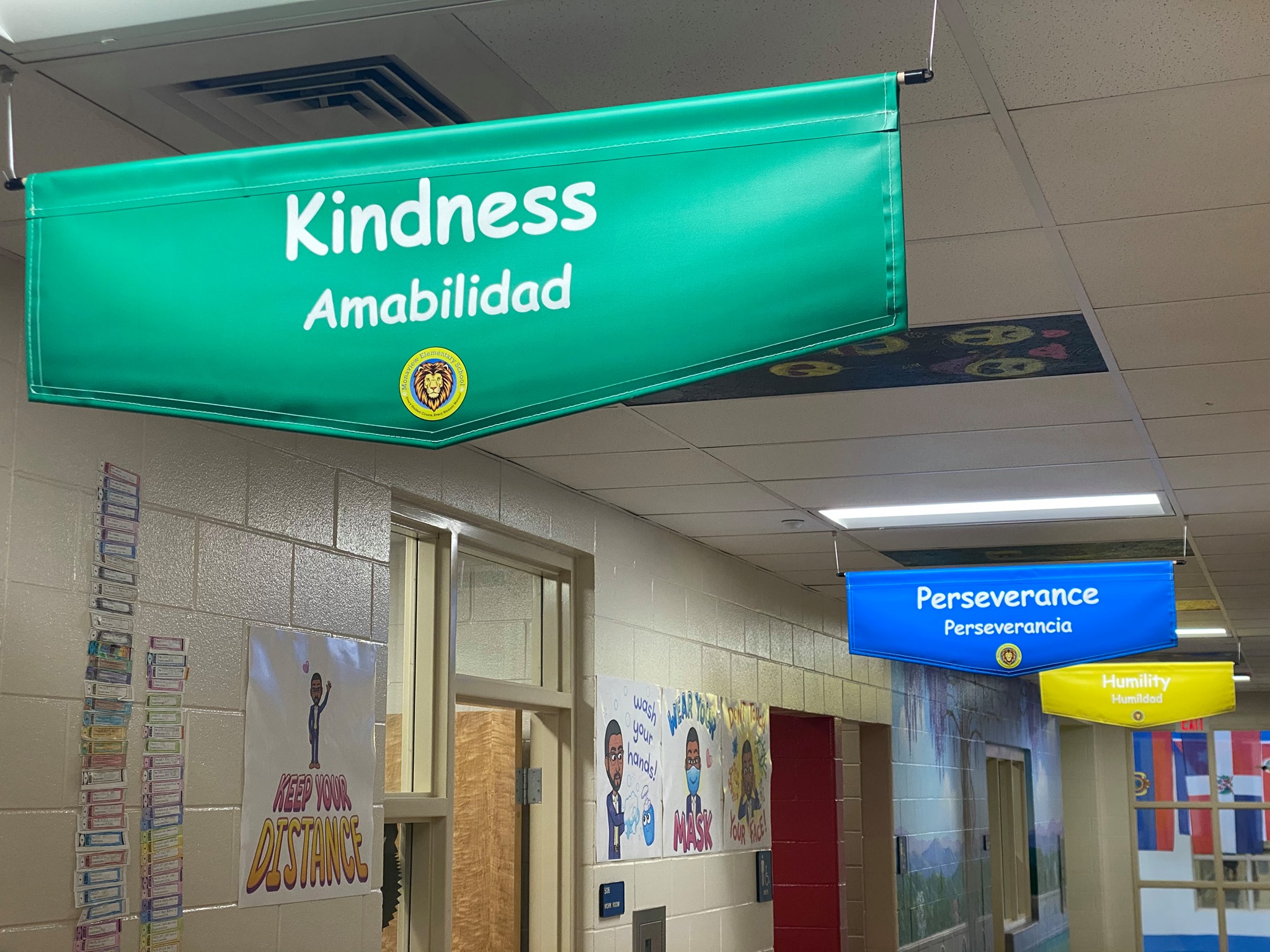
A visible reminder can connect those experiences. Custom character education banners can carry the same trait or short phrase students hear in class. Plan the teaching first, then choose the messages you want students to recognize throughout the year.
How do you choose monthly character traits?
Start with the values and curriculum your school already uses. Our school core values examples can help your team clarify the language before building its calendar. Ask teachers, counselors, students, and families where students need more opportunities to practice them. Translate a broad need into a teachable action: responsibility might mean completing a classroom job or asking for help when a task is unclear.
Character.org’s 11 Principles framework calls for shared core values that are defined, modeled, and embedded in school life. A monthly calendar can organize that work without replacing your existing curriculum.
Schools use different sequences. Stoney Creek Elementary lists kindness for August, while Explorer Elementary begins with respect. Follow your district’s adopted sequence when one exists; otherwise, choose an order that fits your students.
For the broader foundations behind this planning, see our complete guide to character education.
An adaptable August–June character education calendar
Adapt this original sample calendar to your school’s program. Each row connects one trait to a definition, an activity, an announcement prompt, and a brief banner message. The prompt is a starting point you can vary each day.
| Month | Trait | Student-friendly definition | Teachable activity | Daily announcement prompt | Brief banner message |
|---|---|---|---|---|---|
| August | Respect | Treat people, shared spaces, and materials with care. | Act out asking to borrow a supply; let partners practice both roles. | Whose ideas will you listen to today? | Respect: Listen and Care |
| September | Responsibility | Do your part and take ownership of your next step. | Make a classroom-job checklist, including when to ask for help. | What is one job you will follow through on today? | Responsibility: Do Your Part |
| October | Cooperation | Work with others toward a shared goal. | Build a paper bridge in teams; practice sharing ideas and rotating roles. | How will you make room for a teammate’s idea? | Cooperation: Better Together |
| November | Gratitude | Notice and appreciate others’ help and effort. | Write or draw a thank-you naming one specific helpful action. | Who helped our school today, and how? | Gratitude: Notice the Good |
| December | Empathy | Try to understand another person’s feelings and perspective. | Discuss how two story characters experience the same event; practice asking how someone feels. | What could you ask to understand someone better? | Empathy: Ask, Listen, Understand |
| January | Perseverance | Try another approach and seek help when learning is hard. | Revise a paper design after feedback; explain what changed. | What could you try differently if your first plan does not work? | Perseverance: Try, Learn, Try Again |
| February | Kindness | Choose words and actions that help or include others. | Rehearse inviting someone to join a partner activity. | How can you help someone feel included today? | Kindness: Make Room for Others |
| March | Honesty | Tell the truth and be clear about your own actions and work. | Role-play a fictional mistake and a truthful way to explain and repair it. | What can you say when you need to correct a mistake? | Honesty: Tell the Truth |
| April | Fairness | Help everyone have a fair chance to take part. | Discuss which tools fictional students might need to join the same activity. | What would help everyone join today’s activity? | Fairness: Everyone Can Take Part |
| May | Courage | Take a helpful next step even when it feels difficult. | Practice asking a question or respectfully sharing a different idea. | What question would you like the courage to ask? | Courage: Ask, Try, Speak Up |
| June | Citizenship | Care for and contribute to your community. | Plan a class project that leaves shared books or materials ready for the next group. | What will you leave better for the next group? | Citizenship: Care for Our Community |
For an extension to June’s project, explore our citizenship teaching ideas. For the display component, use the wording column to plan trait banners customized for your school; each banner can feature one trait or phrase.
What if your school starts in September or ends in May?
Move respect to your opening month and combine or revisit other traits as needed. A school ending in May could use citizenship for its closing project and teach courage through earlier activities.
For year-round calendars, use instructional blocks rather than fixed months. If breaks shorten December, continue empathy into January before introducing another focus. Keep November’s gratitude activity about everyday contributions so participation does not depend on a particular holiday.
Treat the calendar as a sequence you can revise. Keep practicing earlier traits when the featured month changes.
What should happen during each trait’s focus month?
Use a repeatable cycle that your staff can sustain:
- Introduce and model. Agree on the definition and demonstrate one action students can practice.
- Rehearse. Use a story, role-play, or classroom task with time for feedback.
- Apply. Prompt students to use the skill during ordinary learning and group work.
- Reflect and revisit. Ask what worked, what was difficult, and where the trait connects to a previous month.
This approach draws on CASEL’s guidance on explicit SEL instruction, which emphasizes connected activities, active practice, clear goals, and reflection. The calendar and activities here are planning suggestions, not an evaluated curriculum.
For younger students, offer drawings, demonstrations, and spoken responses. Let students participate through their usual communication supports. Use fictional situations for sensitive discussions rather than requiring personal disclosures.
How can you turn one announcement prompt into a week of practice?
For February’s kindness focus, keep the message consistent while changing the task:
- Monday: Define inclusion and model an invitation.
- Tuesday: Ask, “What could you say to invite someone into today’s activity?”
- Wednesday: Invite students to notice a helpful action during group work.
- Thursday: Discuss what to do if an invitation is declined.
- Friday: Reflect: “Which invitation helped someone participate?”
Give classrooms time to respond after the announcement. A short reflection can connect a schoolwide message to a real choice.
Send families the same definition and one optional conversation prompt: “When did someone make room for your idea?” Broward County Public Schools’ character education resources provide an example of monthly teaching supported by materials for different grade bands and family newsletters.
How can you adapt monthly character traits for middle school?
Keep a shared trait but change the situation and the level of student responsibility.
For honesty, discuss giving credit in a group project. For empathy, compare perspectives in a fictional group-chat misunderstanding. For perseverance, have students revise a project plan after feedback and identify useful support.
Invite advisory groups to propose announcement examples and explain why a message fits the trait. Students can evaluate whether “Cooperation: Better Together” describes how their group actually works. Our middle school kindness article offers additional discussion and role-play ideas.
How do banners support the monthly calendar?
Use banners as reminders of language students have already explored. Refer to the displayed trait during a lesson, then ask students to identify an action that would put it into practice. Banners support this teaching; displaying a word alone does not establish a behavior or guarantee an outcome.
You do not need eleven banners to use an eleven-month plan. A smaller selection of enduring traits can remain relevant all year. For example, respect, responsibility, and kindness can connect to cooperation, empathy, honesty, and citizenship lessons.
Choose school colors and an optional logo, then compare the banner color and font options. Keep messages brief and review the final wording and layout in your design proof. Match the displayed terms to the language teachers use.
Review current character banner options and pricing before deciding on quantities. Banners are priced individually, and shipping and handling are additional. Choose the selection that fits your teaching plan and available budget. Our school banner buying and purchase order guide can help you prepare an approval packet.
Frequently asked questions
Is there a required character trait for each month?
Use your school’s or district’s adopted calendar if it has one. Schools publish different sequences; this August–June example is an adaptable planning tool.
Can we repeat a trait during the year?
Yes. Revisit a trait after a break, connect it to a new situation, or extend it when students need more practice. A monthly focus does not put earlier learning on hold.
Do we need character awards every month?
You can use the calendar without awards. For this plan, feedback and reflection can focus on specific actions and students’ next steps.
What belongs on a character trait banner?
Choose one trait or a short phrase that matches your teaching language, such as “Responsibility: Do Your Part.” Use announcements and classroom activities for the fuller explanation.
Bring your monthly trait plan into view
Choose the traits your team wants to teach, select the messages worth displaying, and gather your school colors and optional logo. Then start your custom character education banner order to turn those choices into a coordinated visual reminder for your school.
Key Takeaways
- Adapt the monthly trait sequence to your adopted program and actual teaching calendar.
- Connect each trait with a clear definition, active practice, announcements, and reflection.
- Choose a useful set of enduring banner messages; an eleven-month plan does not require eleven banners.