Cafeteria Expectations for Elementary Schools: Positive Rules, Routines, and Visual Reminders

On this page
Cafeteria expectations for elementary school students should explain what to do during arrival, the lunch line, seating, cleanup, and exit. Use positive, observable language, teach each step in the cafeteria, and give adults shared prompts. Pair brief character-value reminders with detailed instructions where students need them.
A banner saying “Respect” can introduce a conversation about waiting for a turn. A sequence card can show where to join the line. Both belong in the plan, alongside demonstration and practice.
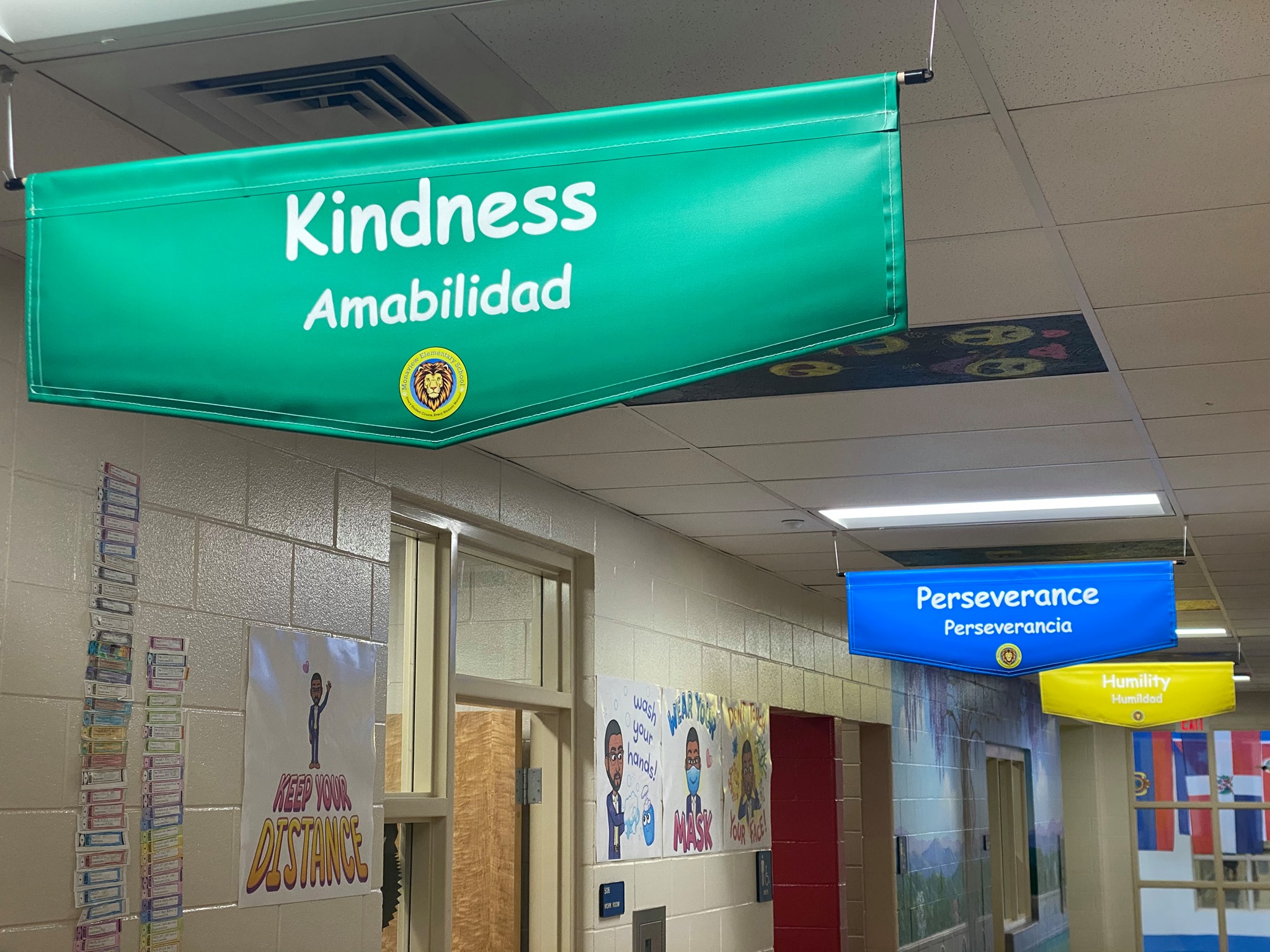
If your team is preparing visual reminders, explore Prosign’s custom character education banners while you develop the routines those messages will support.
What makes a good cafeteria expectation?
Start with actions children can demonstrate. “Use manners” leaves room for interpretation. “Use our help signal when you need an adult” gives students something specific to practice.
The IRIS Center’s guidance on elementary rules recommends positive wording, simple terms, and observable behavior. Apply those principles to cafeteria rules for students:
- Replace “No cutting” with “Join the end of the line.”
- Replace “Stop yelling” with “Use the table-talk voice we practiced.”
- Replace “Don’t leave a mess” with “Put your items in their labeled places.”
Keep your existing school values as the starting point. A school using respect, responsibility, and caring can show what those values mean at lunch without introducing another set of slogans. For broader program context, see our guide to character education. If your team is aligning expectations across campus, start with the schoolwide PBIS matrix examples.
An elementary cafeteria routine, from arrival to exit
Build the routine with classroom teachers, lunch supervisors, and cafeteria staff. Include what happens for students bringing lunch and those getting a school meal.
The table below contains original planning examples, not universal cafeteria rules. Replace the destinations, signals, and item-return steps with your school’s actual procedures before teaching them.
| Stage | Positively stated student example | What adults demonstrate and check | Detailed reminder |
|---|---|---|---|
| Arrival | “Walk to our class’s lunch line or table.” | Show both starting routes. Ask a student bringing lunch and a student getting lunch to explain where each begins. | A simple arrival card showing the two destinations. |
| Lunch line | “Join the end of the line. Take your turn asking for what you need.” | Demonstrate where the line begins and how a student asks a server a question. | A short line-entry prompt using the same words staff say. |
| Seating and conversation | “Use our practiced table-talk voice. Take turns communicating. Use our help signal.” | Model a table conversation and the school’s agreed way to request assistance. | A small visual showing the help signal and conversation cue. |
| Cleanup | “Gather your belongings. Return each item to its labeled place.” | Walk through the actual return points and distinguish belongings from items being returned or discarded. | A picture sequence matching the school’s cleanup process. |
| Exit | “When our table is called, take your belongings and walk to our meeting place.” | Demonstrate the dismissal cue and destination. Check that students can explain both. | A brief exit sequence with the school’s chosen destination. |
Notice the difference between a value and a procedure. “Responsibility” describes the idea. Returning an item to its labeled place is one way a student can demonstrate it. Keep both connected when you teach.
How do you teach lunchroom expectations?
Teach the sequence before asking students to manage it during a busy lunch period. Missouri Schoolwide Positive Behavior Support’s sample elementary cafeteria lesson includes practice in the cafeteria before lunchtime, followed by reminders, feedback, and reteaching.
Use this teaching plan for each part of your routine:
- Explain the purpose. “We’re practicing how to ask for help so you know what to do when you need an adult.”
- Demonstrate one sequence. Show the help signal, how the adult acknowledges it, and what happens next. Describe the actions as you demonstrate.
- Practice together. Have students try the sequence with support. Ask, “Which step comes next?” and clarify confusing directions.
- Try it during lunch and review. Give a brief reminder before the relevant moment. Name a specific action you noticed, then identify any step that needs another demonstration.
This follows the explain, model, supported-practice, and independent-practice approach described in AERO’s guidance on teaching routines.
For kindergarten and early readers, teach a short segment at a time and pair it with a picture or demonstration. The IRIS Center’s procedures resource specifically highlights brief statements and visual supports for primary students.
Older elementary students can explain why a step matters, demonstrate it for classmates, and identify wording that needs clarification.
How can lunch supervisors and teachers stay consistent?
Agree on what adults will say and do. The Center on PBIS identifies staff consistency as a key part of implementation and calls for teaching expectations and responding instructionally when students make errors.
Create a one-page cafeteria reference for teachers, supervisors, substitutes, and other adults covering:
- The exact words for the main prompts.
- The attention, help, cleanup, and dismissal signals.
- Who introduces the routine and who supports each stage.
- A brief correction and an example of specific acknowledgement.
- Where adults record recurring questions or confusing steps.
For example, a shared prompt could be: “Join the end of the line.” A follow-up could be: “You found the end and waited for your turn. Thank you.”
Discuss what “table-talk voice” sounds like in this room, then model the agreed example. A printed voice-level number needs an explanation if students have not learned what it means.
Our article on building a positive learning environment offers related ideas for listening to students and giving specific feedback.
Where does student voice fit?
Ask children about the routine before finalizing the words:
- “Where are you unsure what to do next?”
- “How can someone ask to join a conversation?”
- “Which picture would help a new student understand cleanup?”
Invite younger children to show an answer through a demonstration or drawing. Ask older students to explain the routine as though they were welcoming a new classmate.
Use their responses to revise unclear instructions. Tell them what changed: “You said the return directions were confusing, so we added labels and practiced the order again.” Keep these conversations connected to the student and family input encouraged by the Center on PBIS.
What should cafeteria banners say?
Use overhead character banners for short reminders that connect to your teaching. Keep detailed, location-specific directions on a separate card or poster where the task happens.
For example, a “Responsibility” banner can support a cleanup lesson. The nearby procedure card explains the actual return sequence. During practice, an adult can say, “Returning our items is one way we show responsibility.”
Prosign’s one-trait-or-phrase banner options let your school choose a value or short phrase, school colors, and an optional logo.
These are suggested wording ideas to test with your students:
| Audience | Short banner wording | Connect it to this taught routine |
|---|---|---|
| K–2 | Kind Words | Asking for help and thanking someone. |
| K–2 | Take Turns | Waiting in line and taking turns talking. |
| K–2 | Care for Our Space | Returning items during cleanup. |
| Grades 3–5 | Respect Every Voice | Listening and responding during table conversation. |
| Grades 3–5 | Show Responsibility | Following the cleanup sequence. |
| Grades 3–5 | Welcome Others | Practicing a friendly invitation to talk. |
Choose one message per banner. Review Prosign’s banner colors and font choices, then check whether the proposed words are easy for students to recognize and connect to the lesson.
To prepare a design request, gather your phrases, colors, font choice, and optional school logo for the character banner order form. Review the proof with the adults who teach the routine before approving production.
For a wider campus project, our school signage planning article can help connect the cafeteria reminders with other shared spaces.
Frequently asked questions
What are positive cafeteria rules for elementary students?
Examples include joining the end of the line, using the practiced conversation voice, taking turns, using the taught help signal, and returning items to labeled places. Adjust each example to your school’s procedures.
How do you teach cafeteria expectations to kindergarten students?
Demonstrate a short sequence in the actual cafeteria, practice it together, and use brief words with pictures. Check understanding by having children show the next step.
Are cafeteria expectation posters enough?
Use posters and banners as reminders within a teaching plan. Demonstrate the routine, provide practice, and give feedback. A visible message does not establish that students understand the actions it represents.
When should cafeteria routines be retaught?
Revisit confusing steps when students need more support, when procedures change, and when new students arrive. A return from a school break is also a useful time to review.
Should a character banner include the whole cafeteria rule list?
Keep a character banner focused on one trait or short phrase. Put the detailed sequence on a separate visual near the relevant activity so staff can teach and refer to each step.
Make your cafeteria values visible
Choose messages your team can explain through everyday lunch routines. Then start your custom character education banner order with your phrases, school colors, and optional logo. Pair the finished banners with the demonstrations, practice, and shared staff language that give those words meaning.
Key Takeaways
- Define positive, observable expectations for arrival, the lunch line, seating, cleanup, and exit.
- Teach and practice each routine with shared staff prompts and support suited to your students.
- Use short character banners as value reminders and separate visuals for detailed procedures.